Archive
Selected Projects
"Artists often create works that involve a private conversation about very introspective concerns. Conversely, artists also create works that are very public both in their dialogue and their context. In many ways Anitra Blayton blends these two approaches in her "Selective Vision" installation. Her private concerns find a very public realm from which to depart. The examination of personal pain and fears is interpreted through a public discussion of the universality of such pain and fear. We all have experienced our share of them, albeit in varied degrees and amounts. Anitra encourages us to see these two human conditions as complex and not easily classified.
The premise behind "Selective Vision" is that there is always another way to look at a situation, depending upon what one brings to it. As the title implies, we select our interpretation or "vision" of an event, situation or condition, largely based on our particular emotional need at the time of occurrence. No two people will have an identical understanding, and no perception is more valid than another.
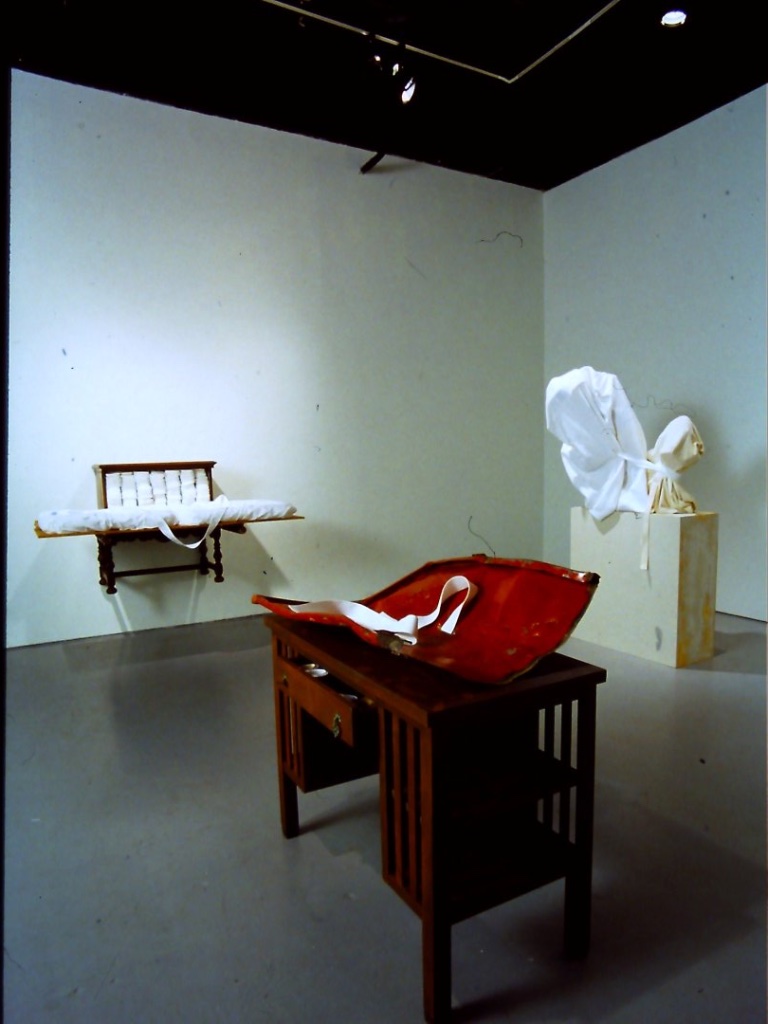
Both "Weeping Marys" and "Monument to a Common Audience" challenge us to examine our preoccupation with self-involvement. In the case of the "Weeping Marys," the notion of "my pain is the greatest pain there is" is challenged as we see in this two-sided unit, an angelic visitation occurring, that clarifies for the occupant of the desk-like side how good her life really is when compared to the tragedy of the soul on the opposite side.
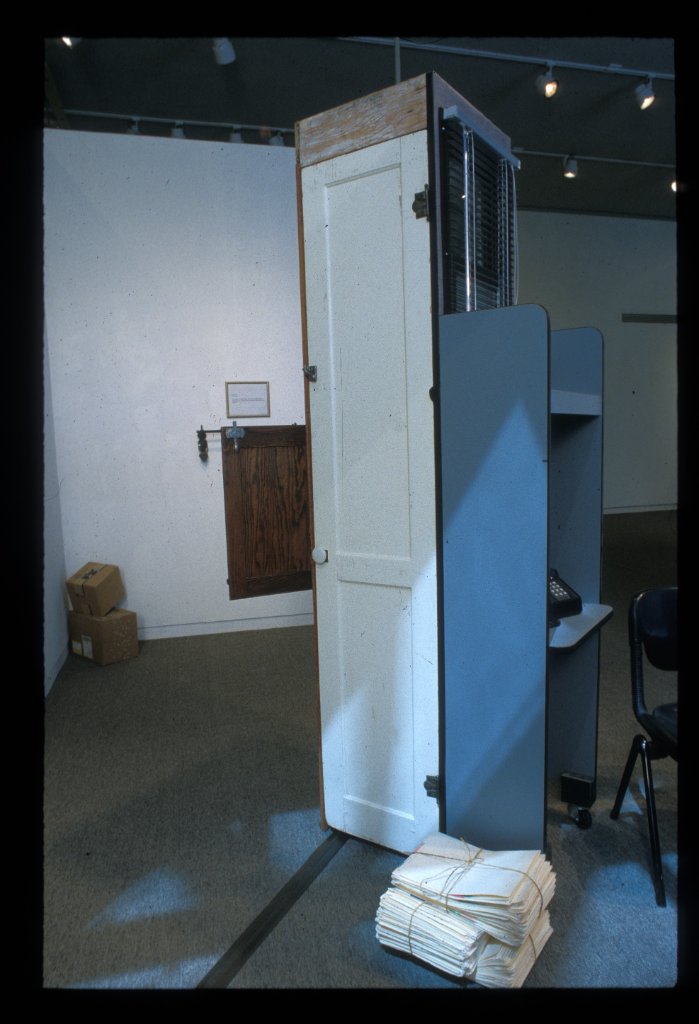
Weeping Marys — installation view
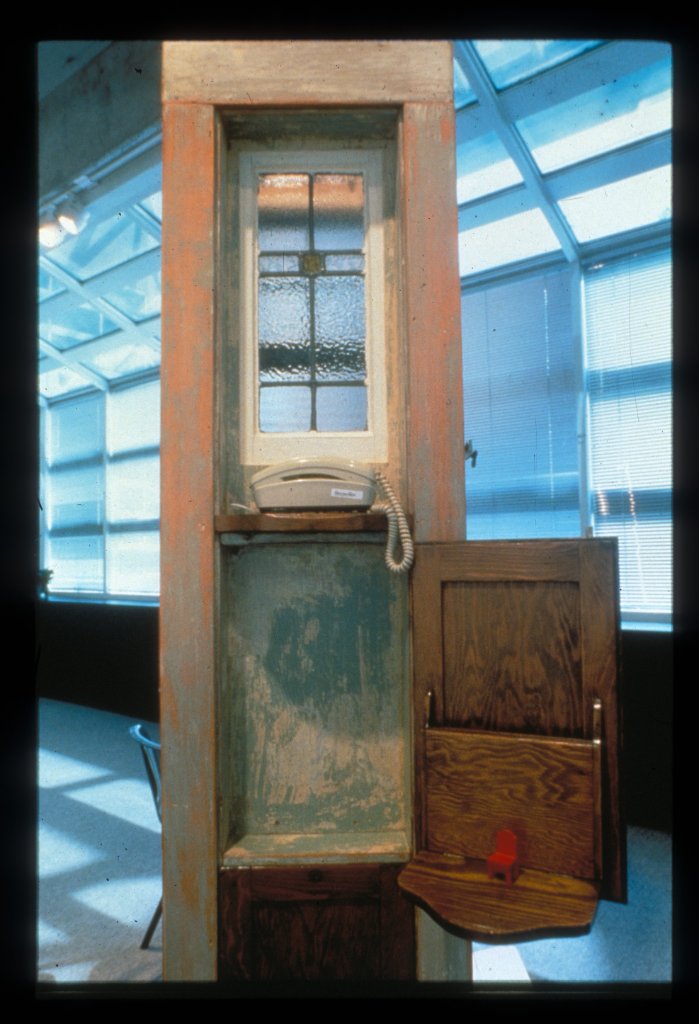
Weeping Marys — fountain view
Similarly, in "monument", those who are self-important and elitist are challenged to look more closely at the basis for their elitism. The veiled text inside the bottled structure indicates how tentative one's notion of superior intellect can be. Who really has the right to determine who is or is not "in the know" or what is or is not valid intellectual discourse? We live in a stratified society where who you associate with defines who you are to the outside world; The idea that everyone's opinion carries equal weight is considered totally unacceptable. In our attempt to be important, we often miss the richness of another viewpoint simply because that viewpoint comes from someone not "in the know." In the end, all souls float equally in the stratosphere, intermingling, freely associating, creating one massive source of creative thought and energy. Our own self-importance prevents us from realizing this ultimate eventuality.
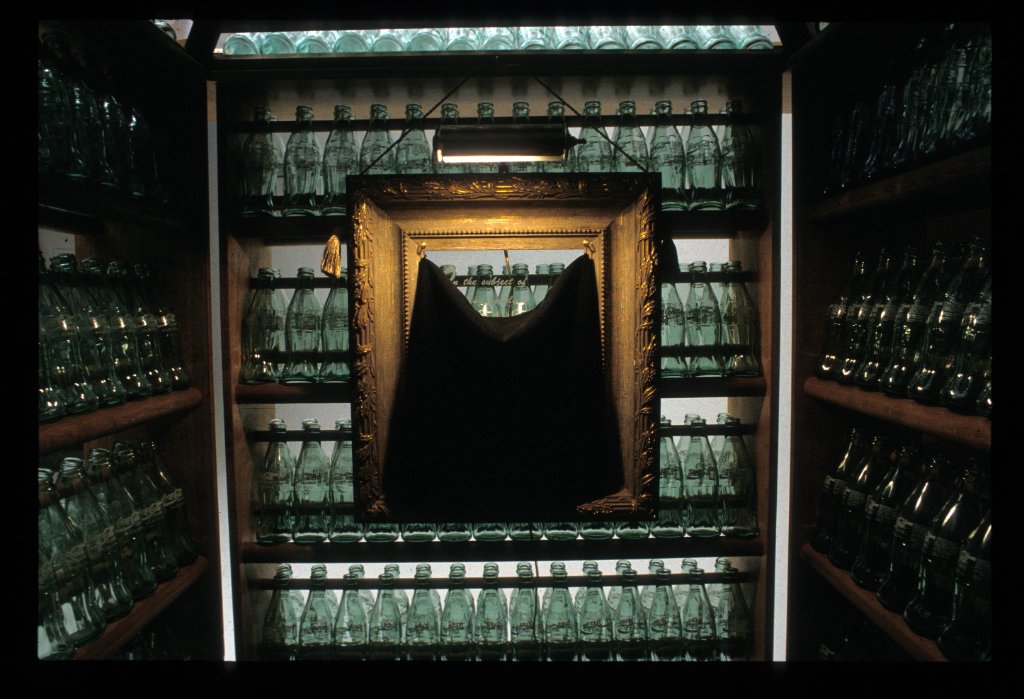
Monument to the Common Audience — detail
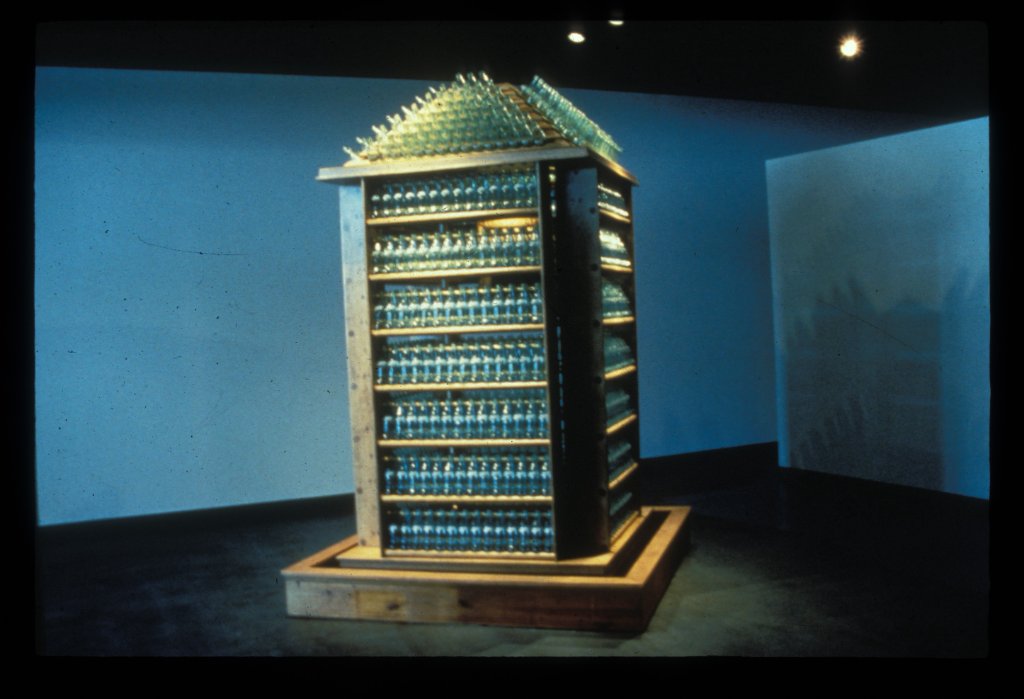
Monument to the Common Audience — installation view, 2007
"Selective Vision" is an installation which requires repeated visits. Ms. Blayton's concerns are layered and complex, although presented in what might appear to be a very inviting manner. The physical beauty of the works is itself a deception. Behind beauty can often be something not quite so beautiful, not quite so perfect, not quite so simple, and Anitra Blayton invites us to strip away our selective vision and take that deeper look."
Excerpts from Selective Vision: An Installation by Anitra Blayton, written and curated by Vicki Meek. Underwritten by Exxon Corporation, Dallas, TX, 2007. Vickie Meek is a renowned artist, cultural leader and activist. Her works have exhibited throughout the United States and is in the permanent collections of the African American Museum Dallas, Fort Wayne Museum of Art and Museum of Fine Arts Houston. Vickie Meek resides in Dallas.
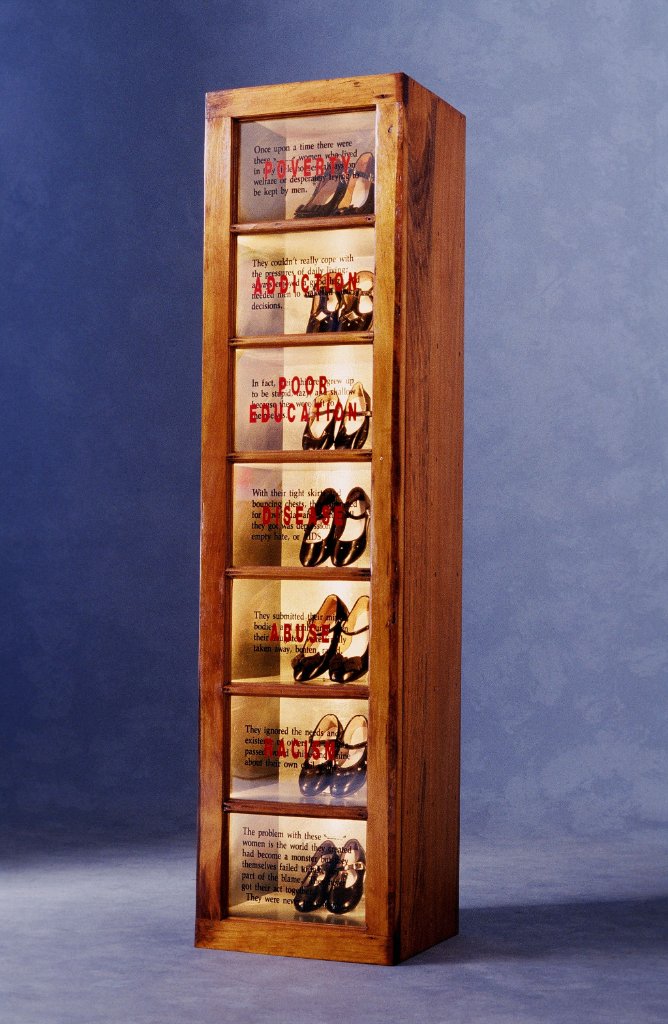
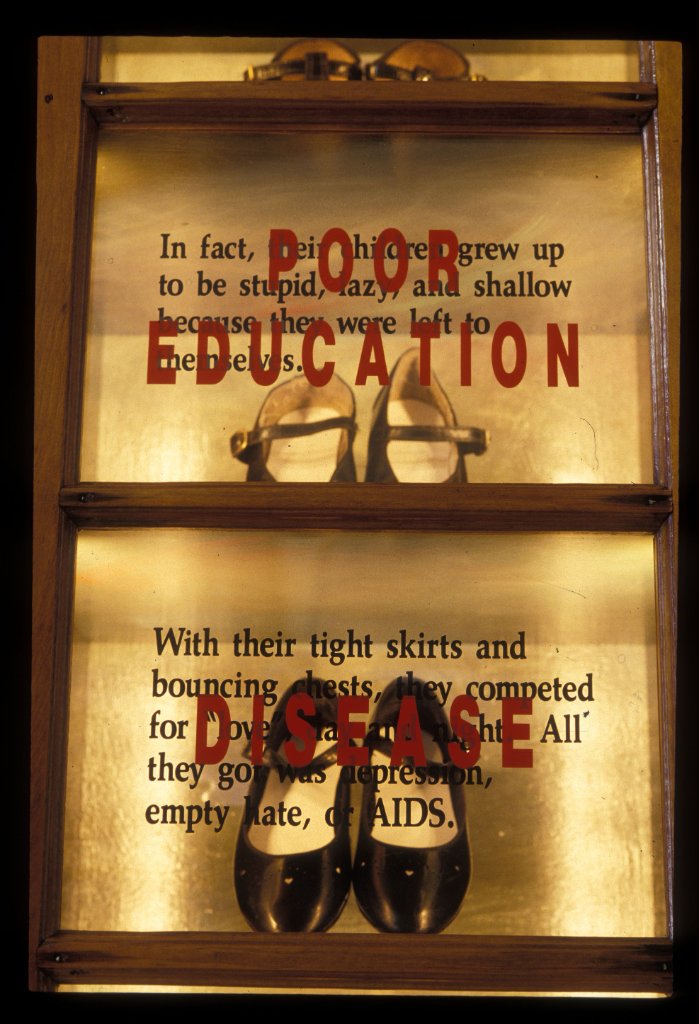
Old Tale on Timeless Pathology
Mixed media wooden curio cabinet, baby doll shoes and text. Collection of Ron Hall, Fort Worth, TX 1992.
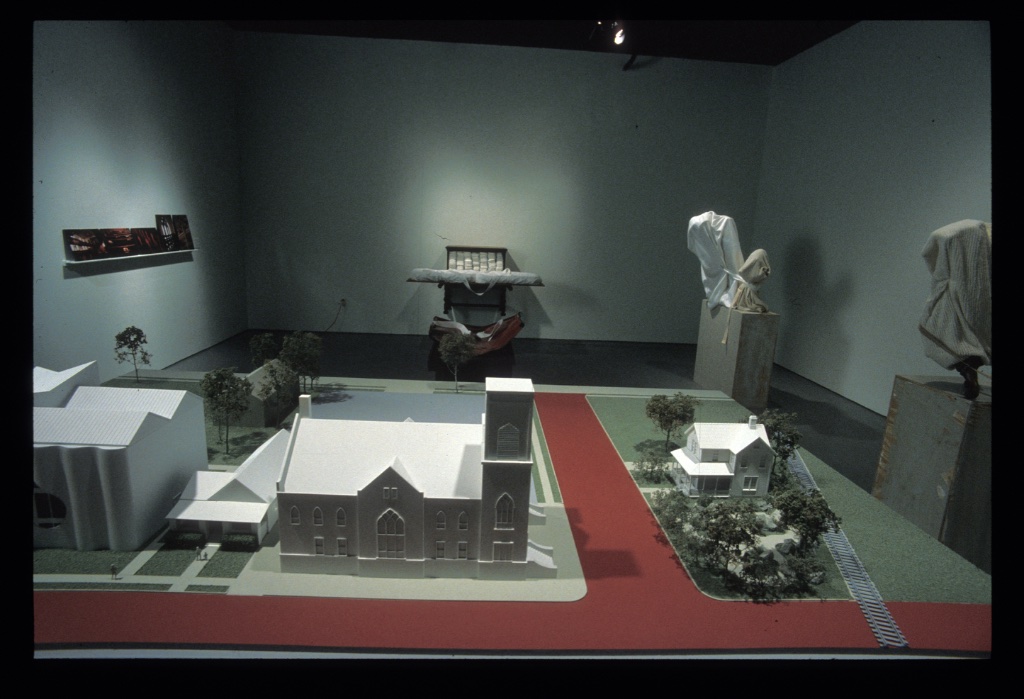
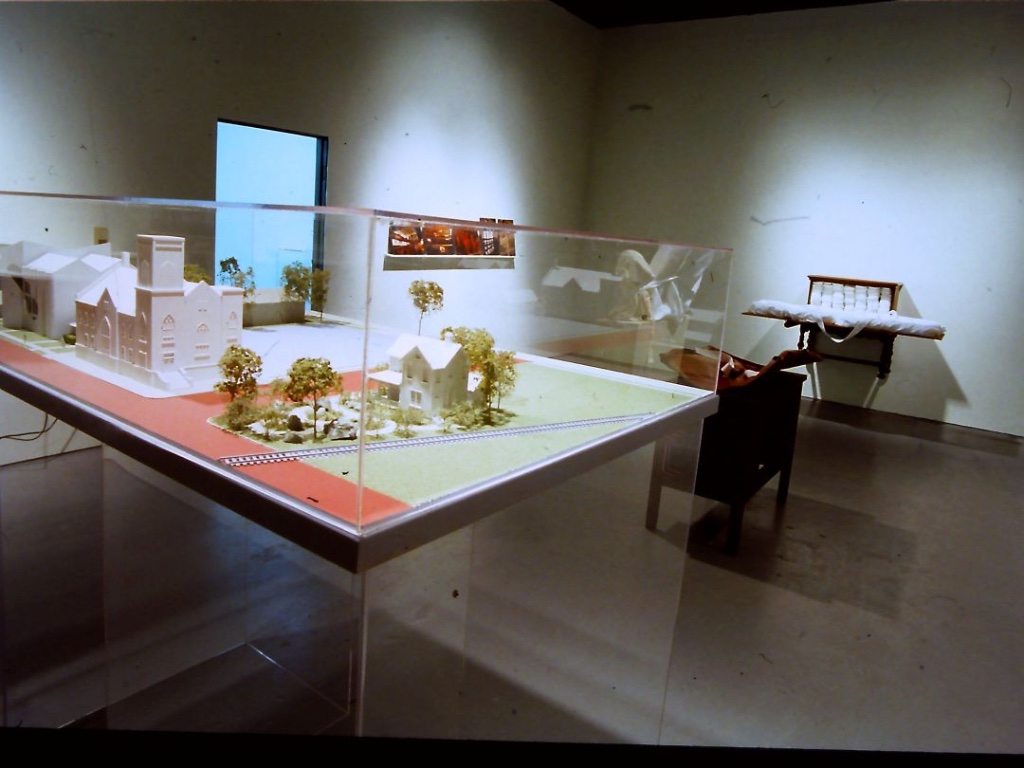
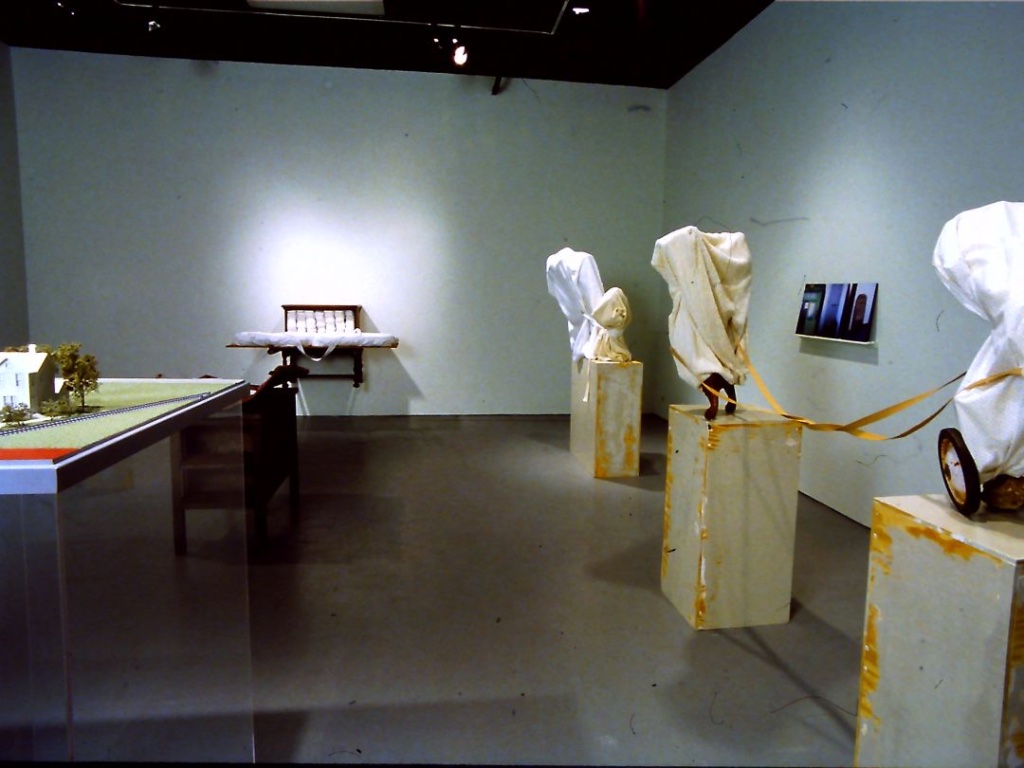
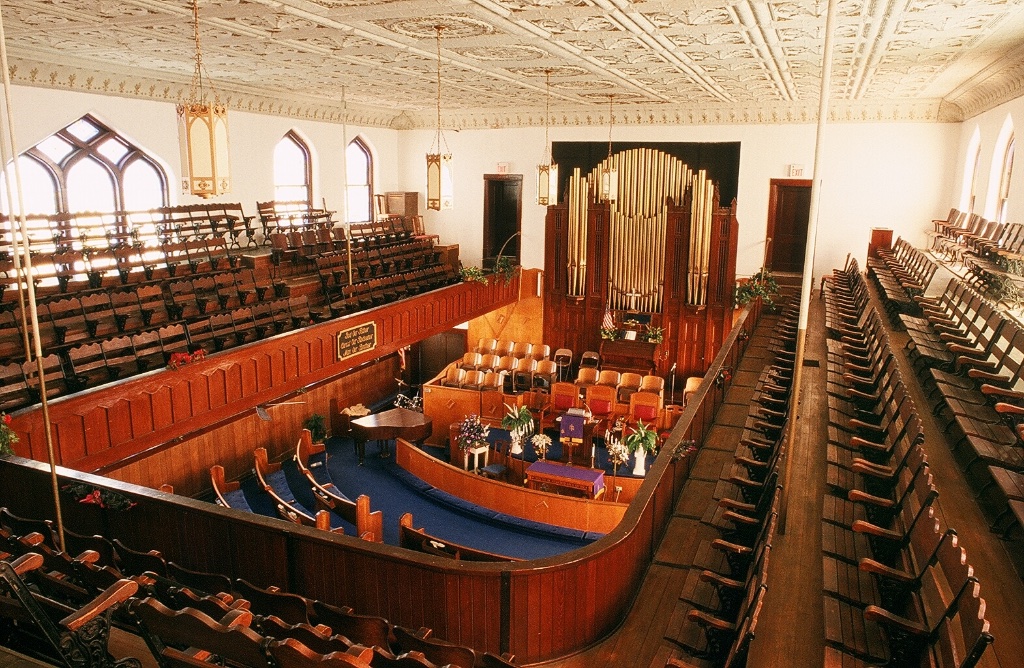
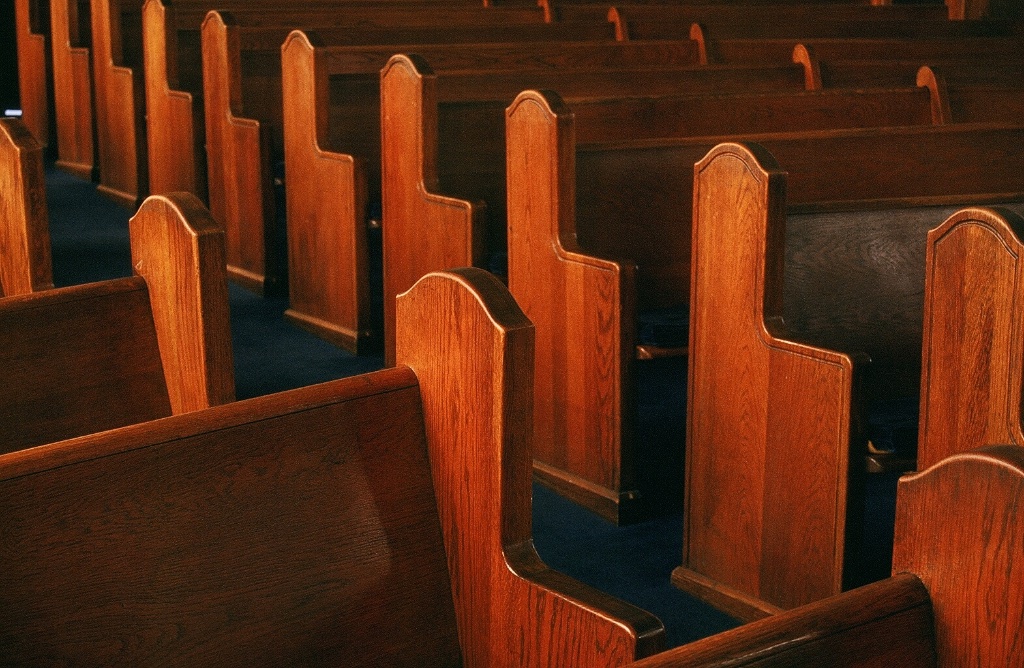
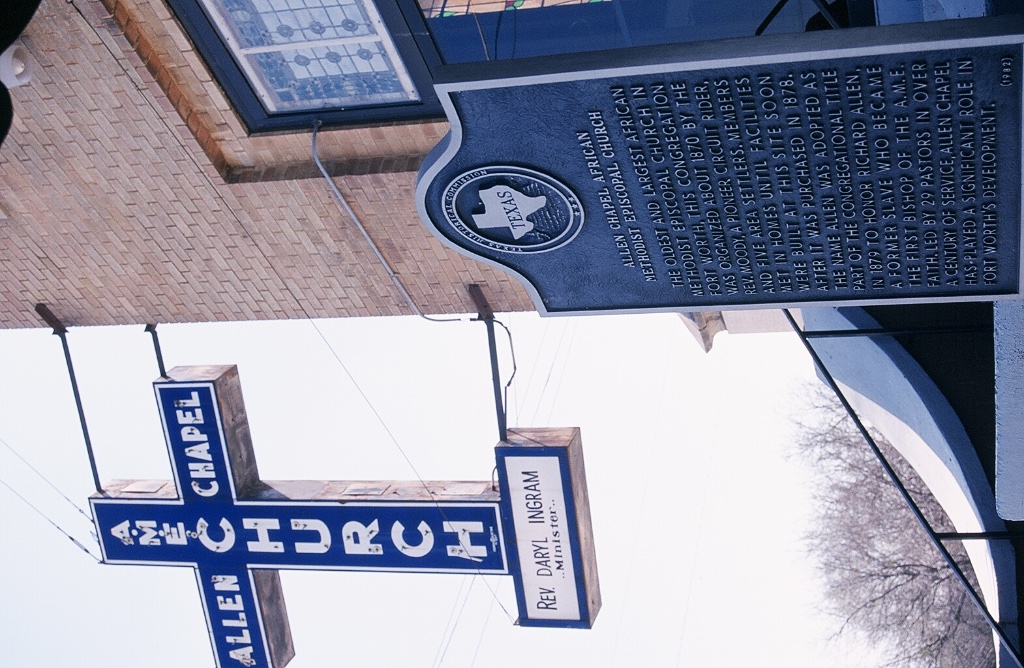

Historic Allen Project: Dialogue, Installation
Mixed media installation exhibited at Four Walls, Fort Worth, TX., 2010, designed by Anitra Blayton. Photography by David Wharton. Models by Robert Reid.
This collaboration under the direction of the lead artist, Anitra Blayton seeks to prompt a dialog that quantifies and qualifies the value of a declining congregation; the more than a century old Black chapel in the modern American community. Blayton asks the question, how can generational conversation serve to contextualize its modern-day goals and functionality while maintaining the integrity of a structure built by children of slaves.
Exhibition Commentary
Walk a Mile in Her Shoes
March 2 – March 30, 2007
Exhibition Commentary is sponsored by Hattitude,…Hats Off to Women, an organization that celebrates the roles that women play, their accomplishments, and their spirit.
This site-specific exhibition features several works by ten accomplished women in various media, including painting, photography, drawing, installation, sound, and video. The esteemed Texas-based artists featured include Anne Allen (Arlington), Francis Bagley (Dallas), Jill Bedgood (Austin), Rachel Bounds (Fort Worth), Christa Diepenbrock (Dallas), Carita Leticia Huckaby (Fort Worth), Tuba Koymen (Arlington), Vicki Meek (Dallas), Celia Munoz (Arlington) and Elaine Taylor (Fort Worth) all of whom are represented from regional to international collections.
To "read someone like a book", is to know exactly what they are feeling or thinking without having to ask. The varied topics illuminated within each artwork arouse the viewer's sensibilities and personal vocabulary with no words spoken.
These varied seductive and textural works force the reader to closely examine complexities found not only in patterns, but also in the social mores they investigate.
Anne Allen's drawings explore pattern. She works from familiar hairnets, Spirographs, lace, doilies, natural patterns including woodgrain and leaves, and architectural ornamentation and structure. In addition to her prolific artistic projects, Allen is a curator and is currently the director of the Arlington Museum of Art (AMA), a museum that specializes in showcasing contemporary Texas artists. She is a spokesperson for the museum and a passionate advocate for contemporary art.
Frances Bagley's "Who are You? is a work that addresses the question of what is there and what is not there and how we relate to that information?" As in all of Bagley's images, this figure attempts to engage you, the viewer, by asking repeatedly, "Who are you? What do you want?" Frances Bagley is a renowned sculptor who works both in the public and private realm. In addition, Bagley is an arts advocate, serving on community-based projects for over three decades. Among her vast achievements, Frances and her husband, esteemed sculptor, Tom Orr were recently awarded the commission as production designers, designing the sets and costumes for the fall 2006 production of Nabucco at the Dallas Opera.
Jill Bedgood addresses the unresolved issues that continue to confront humankind as well as varied perspectives in one's life as it is lived through time and experience. Bedgood has successfully completed numerous residencies, fellowships and public art projects, many of which are interactive in nature. Currently she is working on a streetscape project for the City of Austin titled "Currency", conceptualizing the conflict between the natural species and polluting industries on the San Jacinto River.
Similarly, Rachel Bound's current body of work is inspired by family, personal, cultural, and universal narratives. The work is personally content driven and revolves around the subject of coal mining, the miners' lung decease, Black Lung, …. while we the viewer contemplate the looming subject of man and energy. Rachel Bounds' seductive paintings are both informing and confrontational. Bounds has exhibited both regionally and abroad various subject matter including a stunning "Holocaust" series.
Christa Diepenbrock's paintings explore emotional landscapes surrounding lovers and their secrets kept silent by their home's walls. The paintings are abstracted figured human dramas in which fibers serve to expand on the female narrative. Christa Diepenbrock both artist and freelance curator spent several years working and attending school in New York before relocating to Texas. A recent 2006 graduate of Texas Women's University, Diepenbrock's large-scale paintings has won significant awards and publication.
Leticia Huckaby is morphing and expanding out of her focus of journalism and photography. Now for the first time the camera is turned inward to family history and heritage. Leticia Huckaby is fast emerging as a public artist, commissioned in 2004 to create a photographic artwork for a new Fort Worth branch library. She has recently also received her second commission from Streams and Valleys to create a work as part of the Trinity project.
Tuba Koymen addresses social codes of contemporary society and brings "the spectator closer to universal mind and heart and the images that live there." Koymen received her MFA from the Maryland Institute, College of Art. While emerging through several exhibitions, awards and interactive projects, she also emerges as both a mentor and volunteer.
Always a teacher, Vickie Meek forces the spectator to become engulfed in the very images we choose not to see from day-to-day and say out loud what we are all thinking — how do young Black women buy into the hip-hop imagery of Black female sexuality i.e. "the Hoochie Mama." As she parallels two distinct times, then and now, her very real conversations on popular culture with naiveté are revealed. Vicki is a prolific artist and leading mentor. She herself has paved the way for countless artists both here and abroad. Serving industriously on several boards, Meek is the Director of the South Dallas Cultural Center, an organization that serves the community through literal, performing and visual arts programs.
Celia Alvarez Munoz inspires this exhibition. Upon entering this narrative space, the viewer may gather layers of visual information that she or he would not otherwise receive. It is a space that "feels right" to the community because like every timeless image Munoz executes, the photographs exhibited here are speaking to one community that should be informed and for another community that cannot speak for itself. Celia Munoz is a conceptual multi-media Texas artist known for her diverse works including, book art, Photography, Painting, Installation and Public Art. Her works have shown in museums across the country including the Whitney Biennial. She is the recipient of two National Endowment for the Arts fellowships and the Outstanding Achievement in the Arts by Women's Caucus for Art.
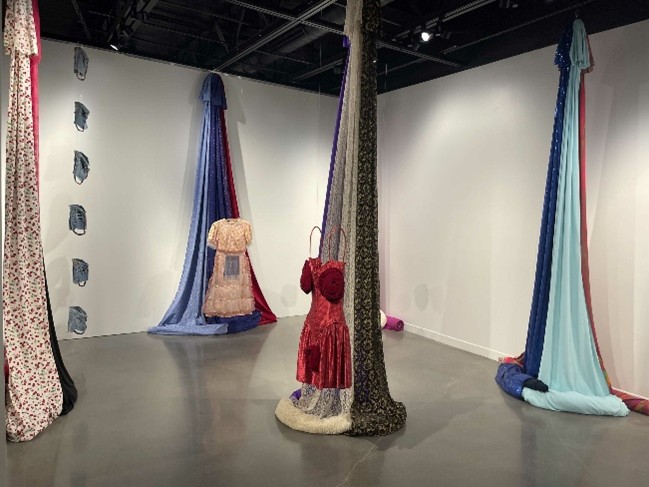
Retrospective Breaking the Binding, Celia Álvarez Muñoz, "Fibra" [fibre], 1997 installed at the New Mexico State University Art Museum. Photo: Hills Snyder
Last but not least, Elaine Taylor's circles, spheres and spirals, suggests universality, the earth's rotation, a full moon, targets, bull-eyes, labyrinths, wheels, gears, a sense of completeness or a place of no return. Representing the infinity "in the largest sense, each of these pieces brings to mind some smaller significance." Taylor is a highly productive installation and performance artist. She has participated in countless exhibitions and residencies her most recent being Black, White and Grey at the Gallery at UTA. In addition to her studio and public work, Taylor facilitates numerous projects at the highly attended Community Arts Center of Fort Worth.
Anitra Blayton, Guest Curator
Artist's Reflection
On Process & Philosophy
On Making
My process begins with a place, a community, a history. I spend time listening to the stories and sitting with the elements that already exist in a space.
Art, for me, is not imposed upon a community but drawn from it. It is the co-authorship of community that determines its own identity and language.
On Purpose
I believe public art is a form of civic conversation and shared experience. When a sculpture is permanently placed in a shared space, it becomes memory for those participants, and it is that personal investment that brings breath to every work.
What draws me most is the moment when people recognize themselves in a work. That recognition — across difference, across distance — is what I mean by "othering" in reverse: not exclusion, but inclusion through the discovery of what we, us, them and they share.
“Art is not only an aesthetic, it is an opportunity. The more we communicate with one another, the less ignorant we are.”